

VPI Launches New In-Country Working Group in Papua New Guinea
July 27, 2026 •
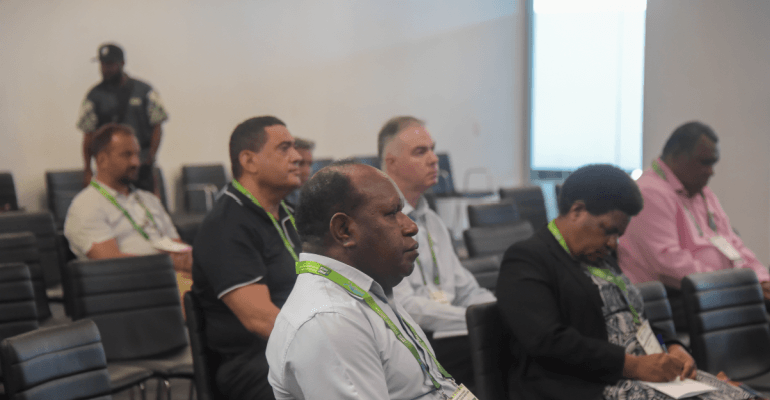
The Voluntary Principles Initiative (VPI) launched a new In-Country Working Group (ICWG) in Papua New Guinea (PNG) on July 16, 2026, during the PNG Resources Week in Port Moresby. The PNG ICWG is the newest addition to the global network of VPI and Partner ICWGs supporting on-the-ground implementation of the Voluntary Principles and its establishment marks the return of an active ICWG to the Asia-Pacific region. The PNG Working Group will provide a multi-stakeholder platform for representatives from government, industry, and civil society to strengthen local capacity to identify and jointly address security and human rights challenges in Papua New Guinea.
Responding to Papua New Guinea’s Operating Context
The decision to establish the Working Group followed consultations with VPI Members and aligned with the Initiative’s long-term strategy of deepening country-level implementation of the Voluntary Principles on Security and Human Rights (VPSHR). Papua New Guinea was identified based on engagement of VPI Members, presence of civic space, and the potential for the working group to create meaningful impact on security and human rights in the country.
Papua New Guinea’s mining, energy, and oil palm sectors play an important role in the national economy. The mining and energy sectors contribute 27.4% of GDP and 88% of export earnings with a US$50 billion project pipeline of planned extractive developments. The oil palm sector contributes US$843 million as PNG’s primary agricultural export. These sectors operate in complex environments shaped by geographic remoteness, cultural diversity, customary land tenure, and overlapping roles among state institutions, customary authorities, companies, and communities.
A stakeholder mapping exercise completed in December 2025 identified recurring security and human rights challenges in Papua New Guinea, including land and benefit-sharing disputes, unresolved issues linked to past projects, impacts on livelihoods, and pressures associated with migration into project areas. Limited public security resources and coordination in remote regions can further increase the risk of grievances escalating into security incidents. These findings highlight the value of a dedicated multistakeholder ICWG for constructive dialogue, stronger coordination, and collective action.
Currently, there are six VPI Corprate Members operating in Papua New Guinea: Barrick, ExxonMobil, Newmont, PanAust, Rio Tinto, and TotalEnergies. The presence of VPI Members in the country, together with the scale and complexity of the extractive sector, provided a solid foundation for establishing an ICWG.
Multi-stakeholder Engagement
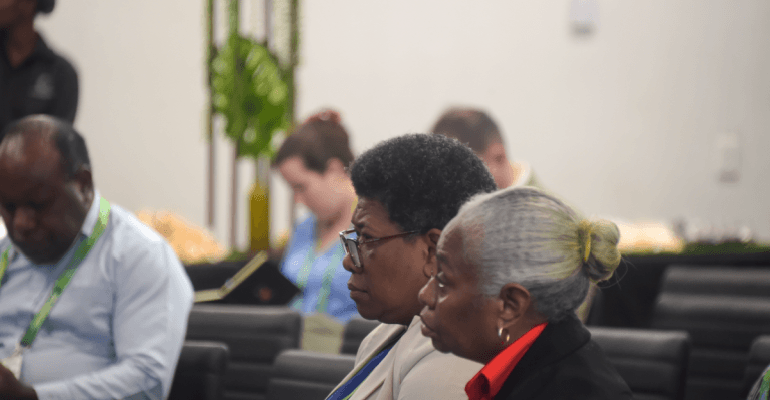
The launch took place during the PNG Resources Week 2026, the country’s leading platform in the minerals and energy sectors. With support from the PNG Chamber of Resources and Energy, the launch event convened around 20 stakeholders with a shared interest in advancing respect for human rights in the provision of security in Papua New Guinea.
Niall Cullens, British Deputy High Commissioner to Papua New Guinea, opened the event, while Ashley Brosnan, Economics Counsellor at the Australian High Commission in Papua New Guinea, delivered the closing remarks. The governments of both the United Kingdom and Australia are Members of the VPI.
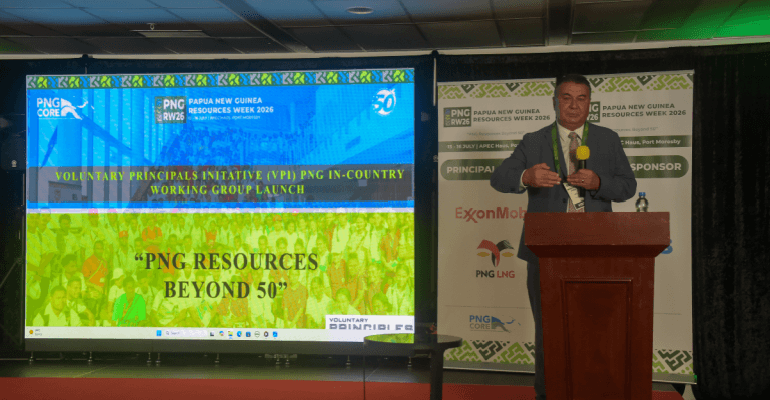
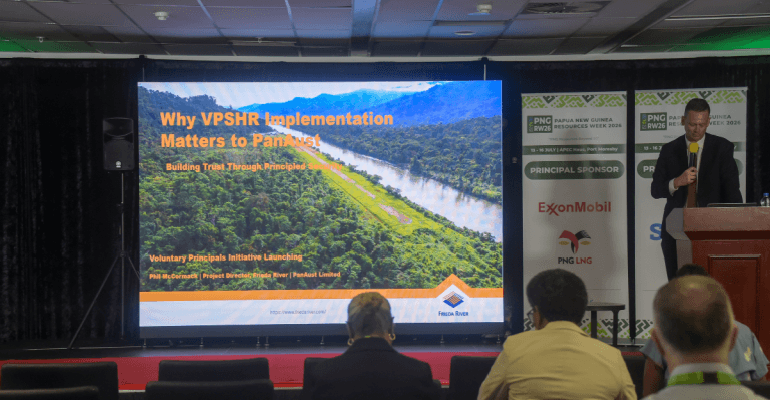
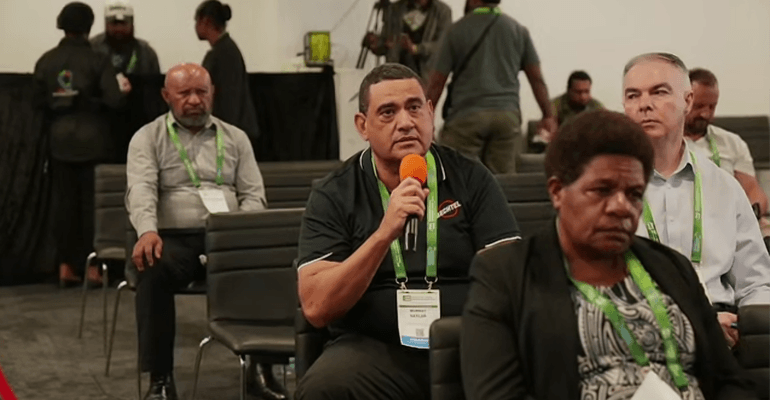
The VPI welcomes stakeholders in Papua New Guinea with relevant expertise in security and human rights to join the working group. If you are interested in participating, or for further information about the PNG ICWG or the broader network of VPI and Partner ICWGs, please contact the VPI Secretariat at Bann.Tabbara@voluntaryprinciples.org.
About the In-Country Working Groups
Voluntary Principles implementation on the ground is always strengthened by constructive multi-stakeholder dialogue involving companies, NGOs and governments regarding security and human rights problems and challenges. The Voluntary Principles Initiative supports and collaborates with a network of Working Groups globally. These groups are intended to facilitate effective country-level implementation of the Voluntary Principles by improving stakeholder coordination and engagement, leading to constructive dialogue. The aim of the working groups is to build on-the ground capacity to identify local in-country risks and challenges related to security and human rights, and to work to identify collective solutions to those challenges.
The VPI actively creates and financially supports a number of In-Country Working Groups which meet regularly to implement agreed-upon activities such as raising awareness and strengthening local capacity, surveying and reporting on local baselines, developing tools and approaches to support local needs. Ultimately, In-Country Working Groups seek to continuously improve their promotion of and respect for human rights in the context of their security practices and will make every effort to prevent conflict.
Today, there are active VPI and Partner In-Country Working Groups in Brazil, Chile, Colombia, Democratic Republic of Congo, Ghana, Guatemala, Mozambique, Nigeria, Peru, and now in Papua New Guinea. More information on the ICWGs is available on our Implementation page.
About the Voluntary Principles
The Voluntary Principles on Security and Human Rights (VPSHR) are an internationally recognized set of principles that guide companies on how to conduct their security operations while ensuring respect for human rights. To promote implementation of the Principles, the Voluntary Principles Initiative (VPI) was created. The Initiative comprises over 80 Members and Observers including companies, governments, and non-governmental organizations that share best practices and mutually support the implementation of the Principles.